

When transit agencies renovate subway stations, brighter lighting is often the first improvement. New LED systems promise better visibility, improved surveillance camera performance, and spaces that feel safer for passengers. It seems like a logical assumption: if people can see more clearly, they’ll naturally feel more secure.
But does more light actually make people feel safer?
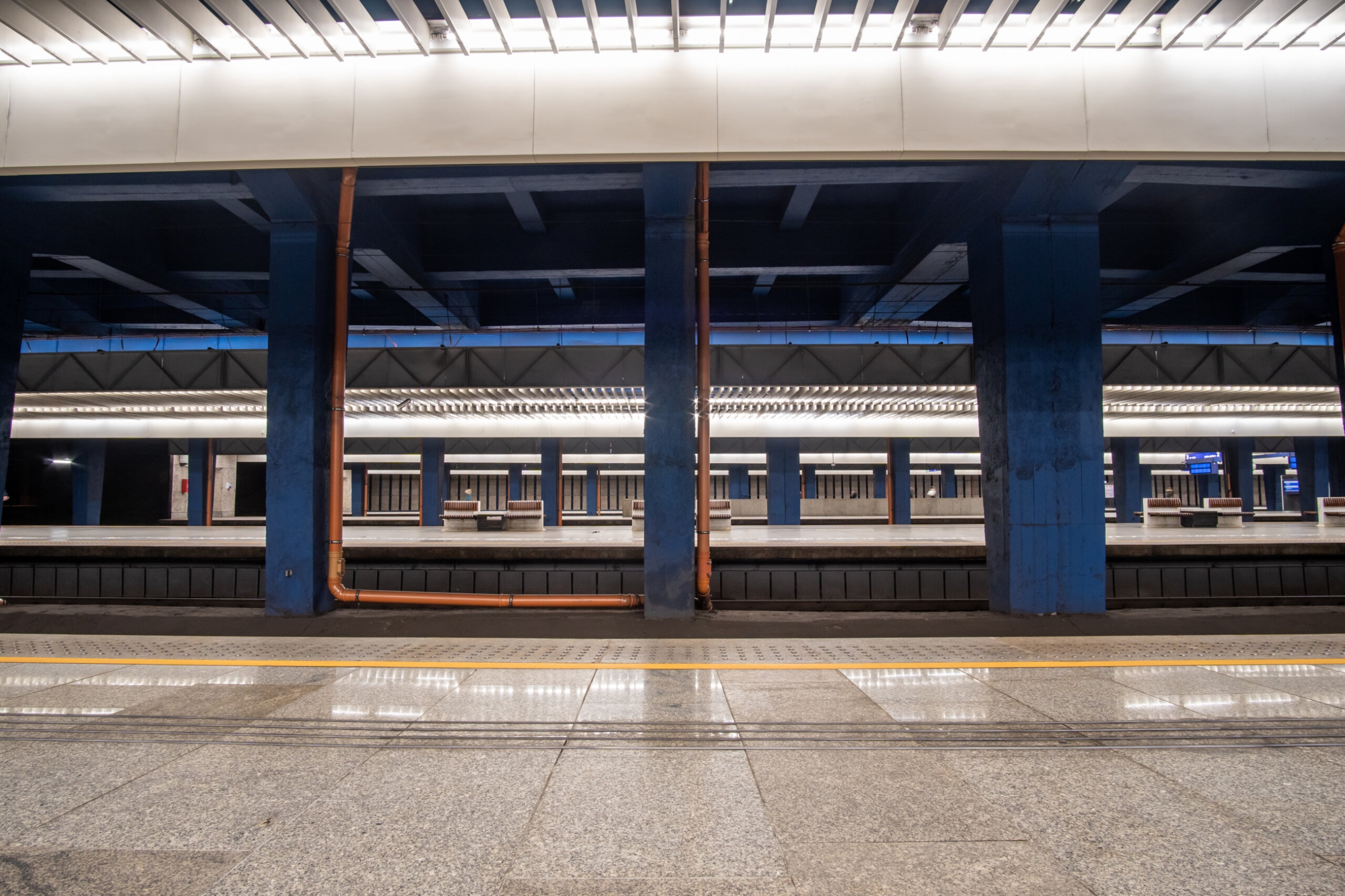
This question became the focus of independent research conducted by The Lighting Practice Lighting Designer Hyesoo Chun for her graduate thesis at Parsons School of Design. Having lived and experienced public spaces in both Seoul and New York, Hyesoo noticed how differently lighting could shape her experience of a space.
“I moved between two very different lighting cultures, Seoul and New York, and became fascinated by how differently those environments felt. I had experienced very bright spaces in Seoul that didn’t necessarily make me feel more comfortable or safer, and I knew that response could be subjective. But rather than dismissing it as simply subjective, I wanted to use it as a starting point for asking better design questions,” says Hyesoo.
As cities continue upgrading aging transit infrastructure with increasingly powerful LED technology, many stations are becoming significantly brighter than before. For example, New York City’s Metropolitan Transportation Authority (MTA) has recently completed the conversion of all 150,000 fluorescent light fixtures across the subway system to LED lighting. Yet research suggests that simply increasing light levels may not improve the passenger experience as much as expected. In some cases, excessive brightness can create glare, visual fatigue, and uncomfortable environments that undermine the very sense of safety lighting is intended to provide. This conversion of fluorescent to LED across MTA’s subway platforms further spurred Hyesoo’s interest in researching the effects of lighting and perceived safety.
Looking Beyond Light Levels
Hyesoo Chun’s research asked a simple but important question: How can subway platforms be designed to increase passengers’ perception of safety besides simply adding more light?
Rather than focusing solely on illuminance, the amount of light reaching a surface, her research explored whether how light is distributed throughout a space has a greater influence on how safe it feels. Her findings challenge the common assumption that making an environment brighter automatically makes it feel safer.
“The biggest takeaway is that the amount of light is only part of the story. The research made me think more about what people are actually responding to beyond simply how much light is provided,” says Hyesoo.
While higher light levels can improve visibility, perception of safety is also influenced by factors such as luminance distribution, visual contrast, uniformity, and glare control. Her research suggests that a luminance-driven design approach, one that carefully balances the brightness of walls, floors, and surrounding surfaces, may create environments that feel safer without relying solely on higher illuminance.
Combining Field Research with Digital Simulations
To investigate the relationship between lighting and perceived safety, Hyesoo approached the study from two perspectives.
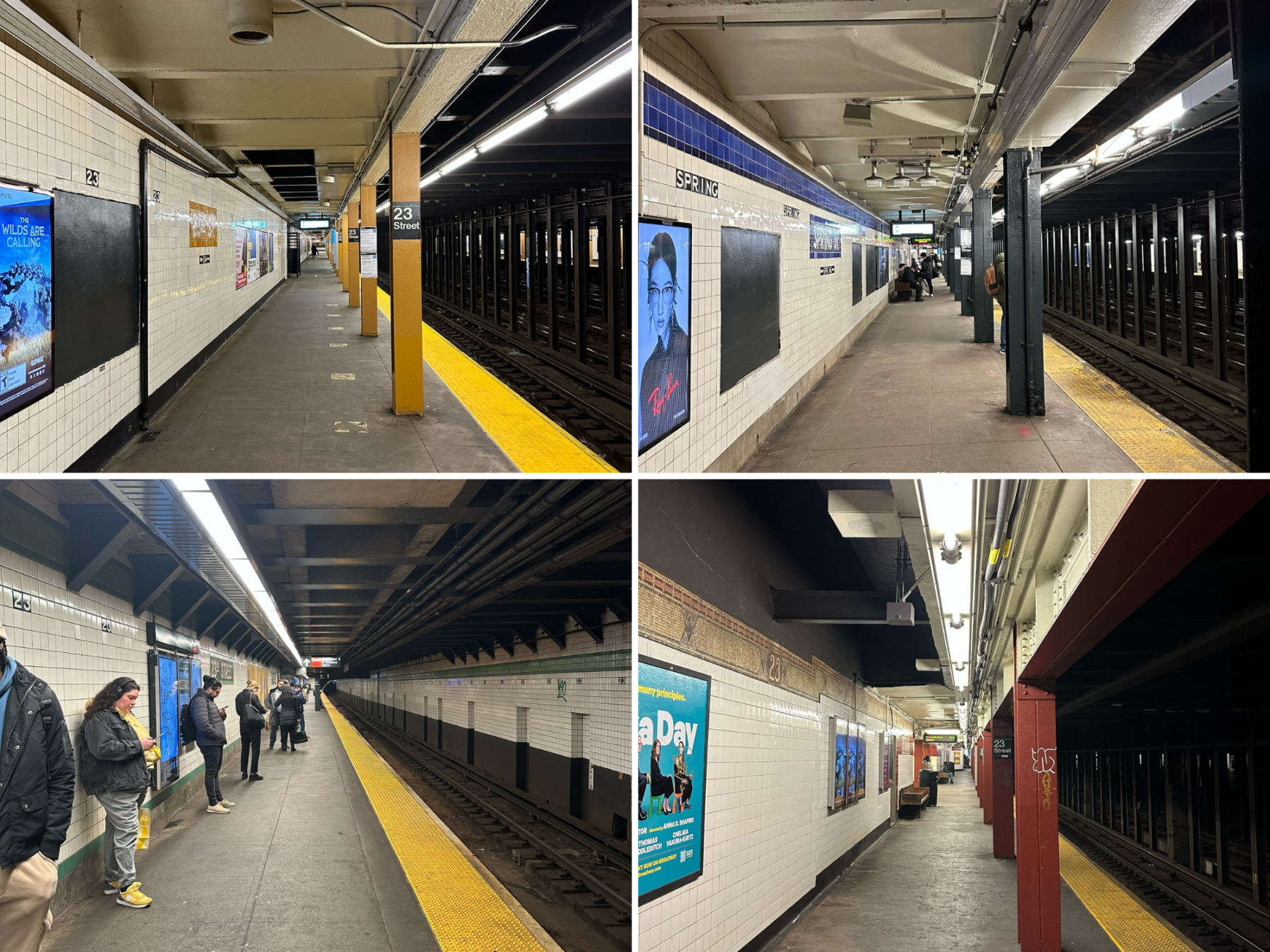
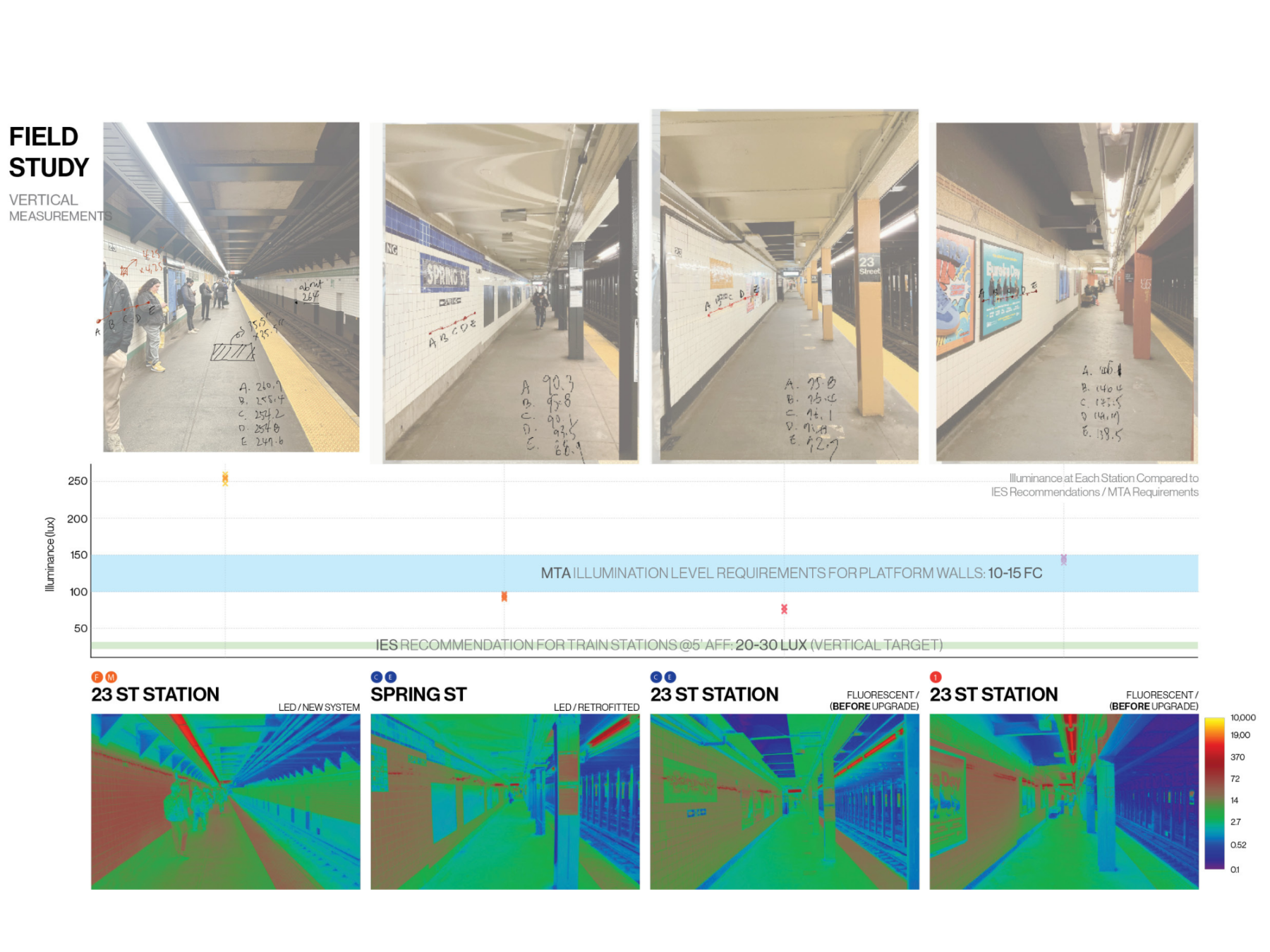

First, she evaluated four underground New York City subway stations with similar platform layouts but different lighting conditions, including both fluorescent and LED systems. Soo measured illuminance on floor and wall surfaces and used HDR luminance imaging to document how brightness was distributed throughout each station. Nearly 100 passengers also completed in-person surveys about how safe and comfortable they felt while waiting on the platforms.
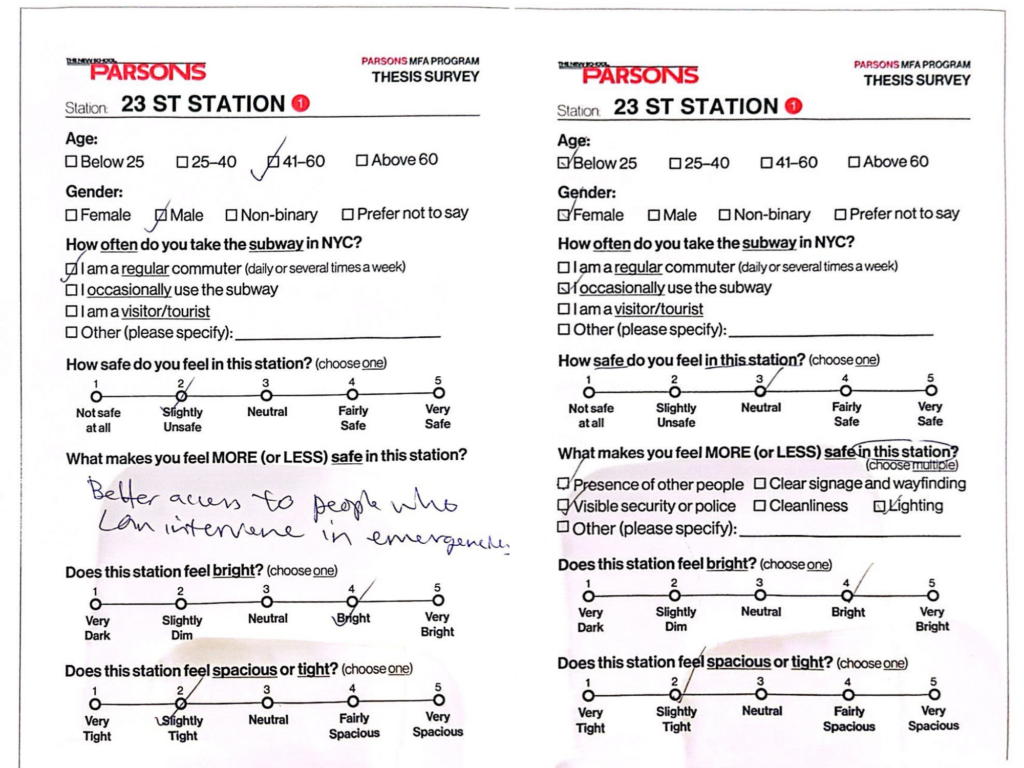
Field Study
The field study provided insight into how people experience lighting in real transit environments, but it also highlighted the challenges of isolating lighting as a variable. Factors such as cleanliness, maintenance, crowd density, and architectural character can all influence how safe a station feels. Importantly, higher illuminance did not consistently correspond with higher ratings of perceived safety.

Digital Lighting Simulations
To better isolate the role of lighting, Soo developed a series of digital simulations with two sets of scenarios. The first tested different lighting distributions at similar illuminance levels, while the second repeated those strategies at approximately twice the illuminance.
Across the simulations, overall light levels remained controlled while one key characteristic changed: the relationship between wall brightness and floor brightness.
Participants viewed each scenario individually rather than comparing them side by side. They then responded to the same questions about perceived brightness, visual comfort, spatial clarity, and safety. This approach allowed Soo to examine responses to different lighting strategies while reducing the distractions and inconsistencies present in real-world environments.
What Actually Makes a Space Feel Safer?
The results challenged a common assumption. Participants did not consistently rate the scenarios with the highest illuminance as feeling the safest.
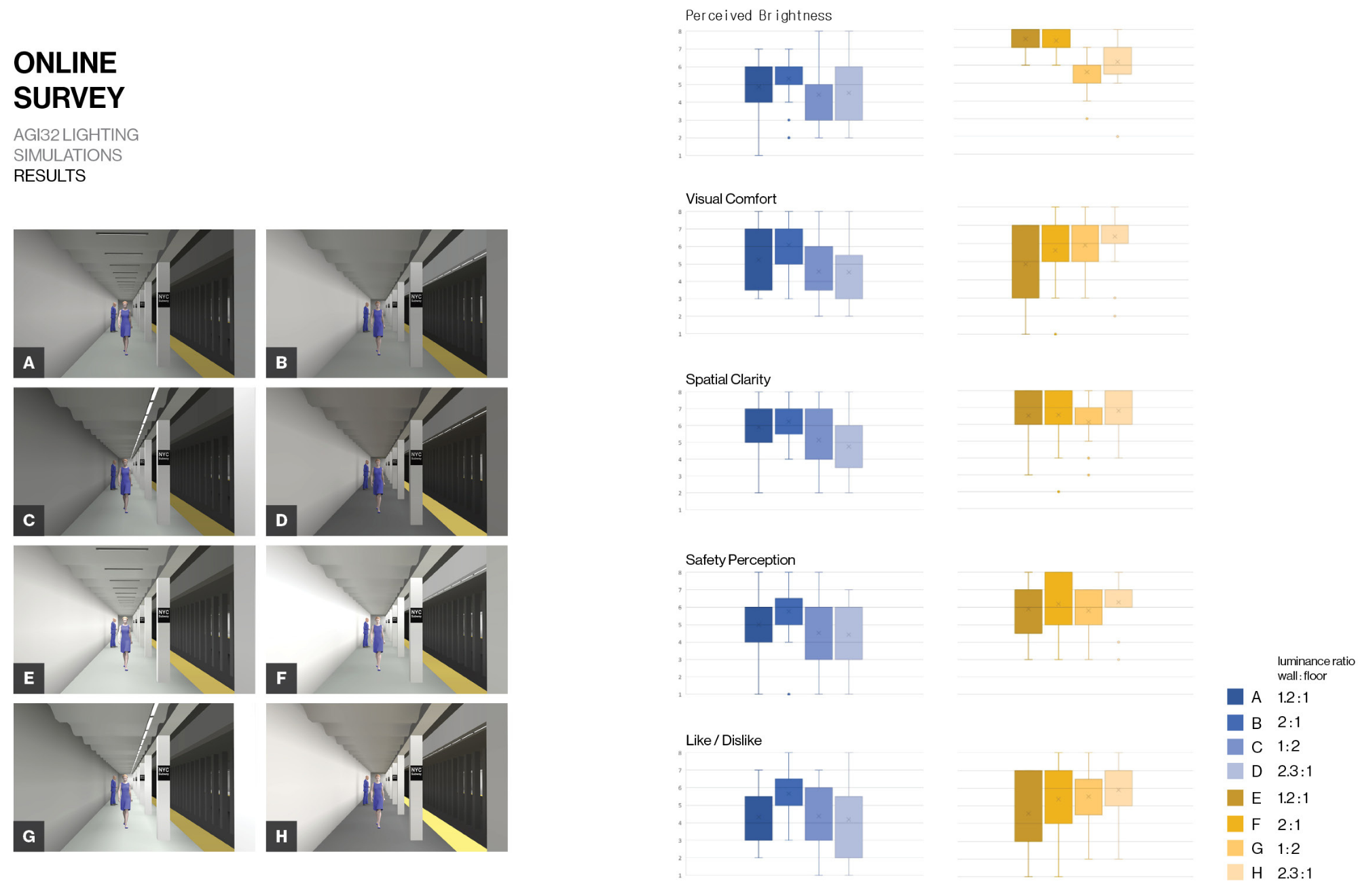 Instead, they responded most positively to environments where light was distributed in a balanced way that improved visual comfort and spatial clarity.

Scenario B&F Favored
“What surprised me in the online survey was how consistently people responded positively to the scenarios with stronger vertical illumination, particularly those where walls appeared approximately twice as bright as the floor,” says Hyesoo.
Perhaps more significantly, doubling the overall illuminance did not change these preferences. Across both lower and approximately doubled light levels, participants continued to favor environments with stronger wall-to-floor luminance relationships.
The findings suggest that brighter does not necessarily seem safer. Increasing illuminance alone may not meaningfully change how safe a subway platform feels. Instead, thoughtful consideration of luminance distribution, visual comfort, and spatial clarity may offer another way to approach lighting for perceived safety.
Ultimately, Hyesoo’s research points to a broader shift in how we think about lighting in transit environments. It is not simply how much light is provided, but where that light goes and how people experience it.
Why Lighting Distribution Matters
Lighting shapes far more than visibility, it influences how people understand and navigate their surroundings. Thoughtfully illuminated vertical surfaces improve facial recognition, reinforce architectural boundaries, strengthen wayfinding, and help people better interpret the space around them. Together, these qualities contribute to a greater sense of orientation, comfort, and confidence.
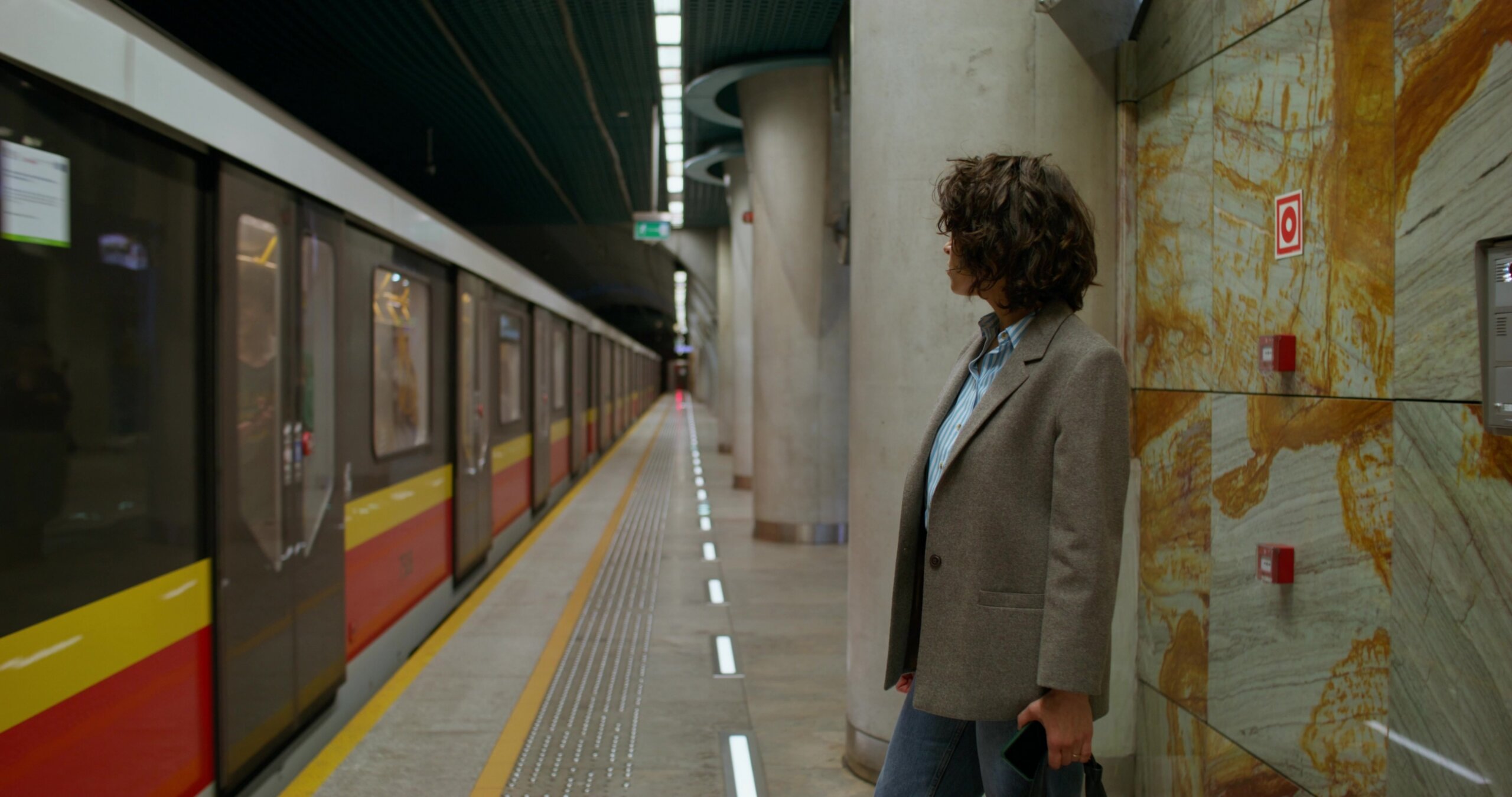
Conversely, environments with overly bright floors and comparatively dark walls can flatten the visual environment, increase glare, and reduce visual comfort despite higher overall light levels.
The research also highlights an important distinction between illuminance, the quantity of light reaching a surface, and luminance, or how bright those surfaces appear to the human eye. While illuminance remains an essential design metric, it does not fully explain how people experience a space.
“To me, perceived safety is about whether people can understand their surroundings and feel comfortable moving through a space. At the same time, that feeling can be affected by many things beyond the lighting itself… That’s why paying attention to how people actually respond to the environment is an important part of evaluating it,” explains Soo.
From Research to Practice
These findings extend well beyond subway platforms. Many public environments, including transit stations, pedestrian tunnels, parking garages, healthcare campuses, educational facilities, and civic spaces, depend on lighting to help people navigate confidently while creating a sense of comfort and security.
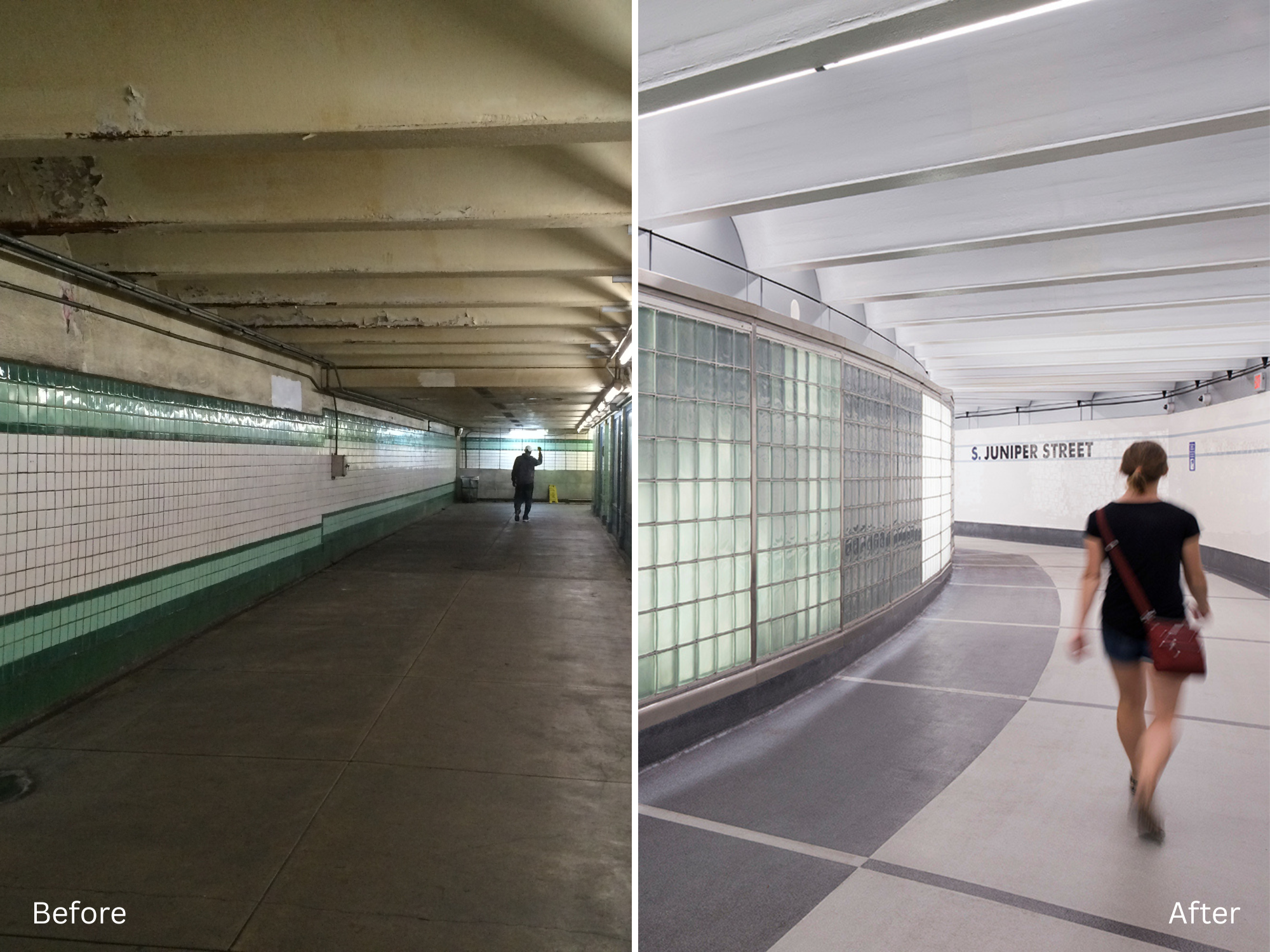
This approach is reflected in projects such as The Lighting Practice’s renovation of the Southeastern Pennsylvania Transportation Authority’s (SEPTA) underground concourses, where lighting was carefully integrated with architectural improvements to create a brighter, more welcoming passenger experience. Rather than relying solely on higher light levels, the design emphasizes balanced illumination, improved visual clarity, reduced glare, and intuitive wayfinding.
Designing for the Human Experience
As cities continue investing in modernizing and improving public infrastructure, lighting designers have an opportunity to rethink what successful lighting really means.
The goal isn’t simply to make spaces brighter.
Hyesoo’s research reinforces an important lesson that perceived safety is not determined by light levels alone. It emerges from thoughtful lighting design that prioritizes balanced luminance, visual comfort, and spatial clarity.