

The Thomas Jefferson University Medical Archives, located in the Scott Memorial Library, holds over 200 years of history. Inside, visitors can discover rare books, medical artifacts, and institutional records that tell the story of the university’s legacy. During a recent transformation, the Archives were reimagined as a versatile destination where students, researchers, and guests can engage with the past.
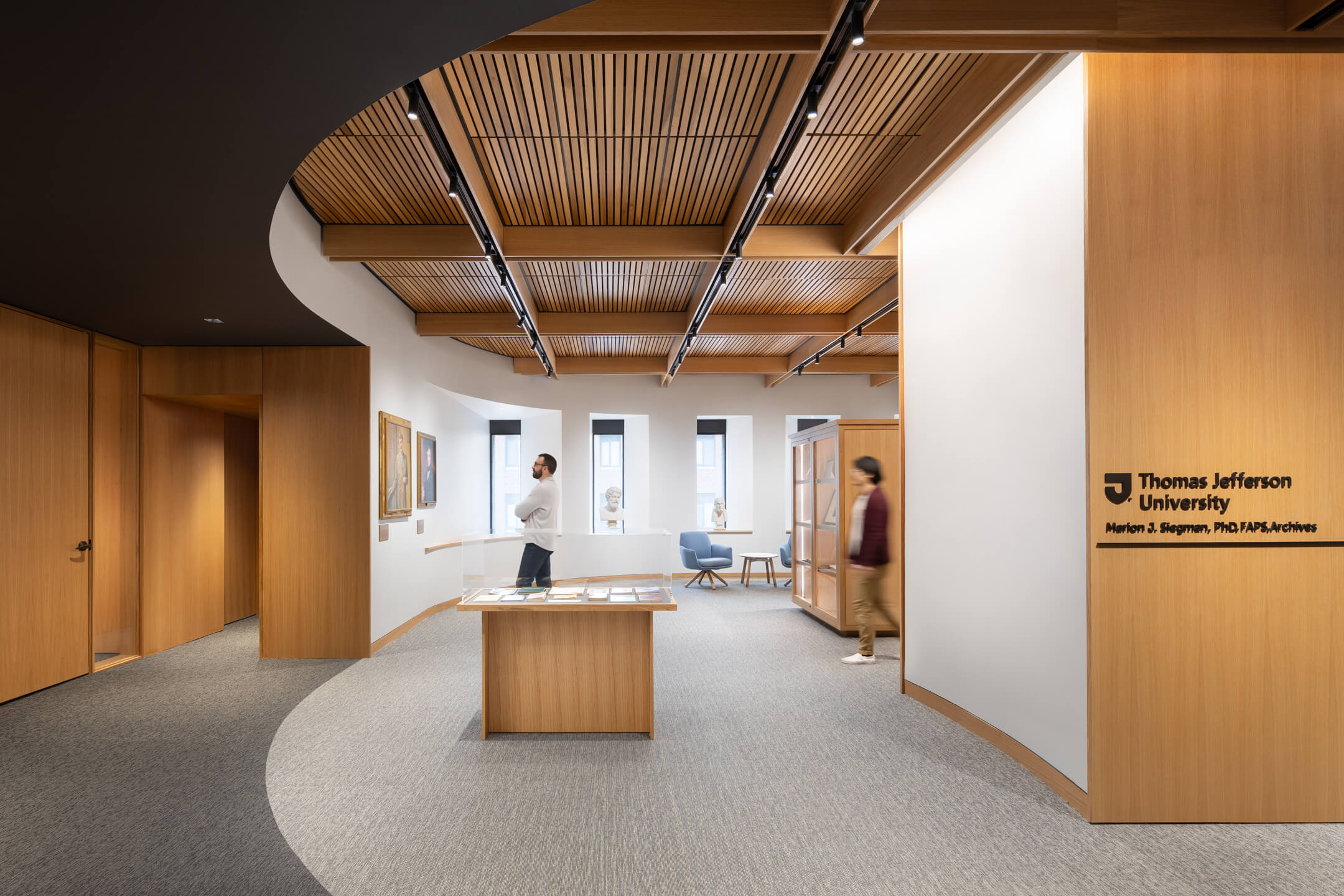
The architect, Studio Modh, envisioned a space that goes beyond storage. A hospitable, gallery-like environment that elevates the artifacts while providing comfort, clarity, and usability.
“The overarching goal was to ground future medical practitioners in the stories of discovery, failure, and innovation that shape the profession,” says Studio Modh Principal Phillip Ryan. “Visitors entering the space are meant to feel a sense of curiosity and reverence, moving from contemplation in the Chamber to inspiration in the Medicine Cabinet, with the history of medicine woven into their daily academic life.”
The lighting design played a key role in bringing this vision to life, incorporating strategies that both support the architect’s intent and highlight the medical archives.

LED grazers highlight the acoustic PET walls, crafted from recycled plastic bottles, adding depth and visual interest while emphasizing the sculptural quality of the surfaces. These walls balance acoustic control with sustainability.
“Vertically oriented LED accents, paired with small millwork downlights, highlight glass displays containing medical archives, directing students, staff, and visitors’ attention,” says The Lighting Practice Associate Principal Ryan Conover. This approach ensures that each artifact is beautifully illuminated and easy to view, while minimizing glare and protecting sensitive materials from excess light exposure.

The Archives contain several unique, interconnected spaces, each with distinct lighting requirements. In the Chamber, a flexible track lighting system and recessed downlights are integrated into the wood ceiling, allowing curators to easily adapt the lighting for future exhibits.
“The lighting system provides flexibility, both in aim and zoning, enabling the space to evolve for different needs,” says Ryan.
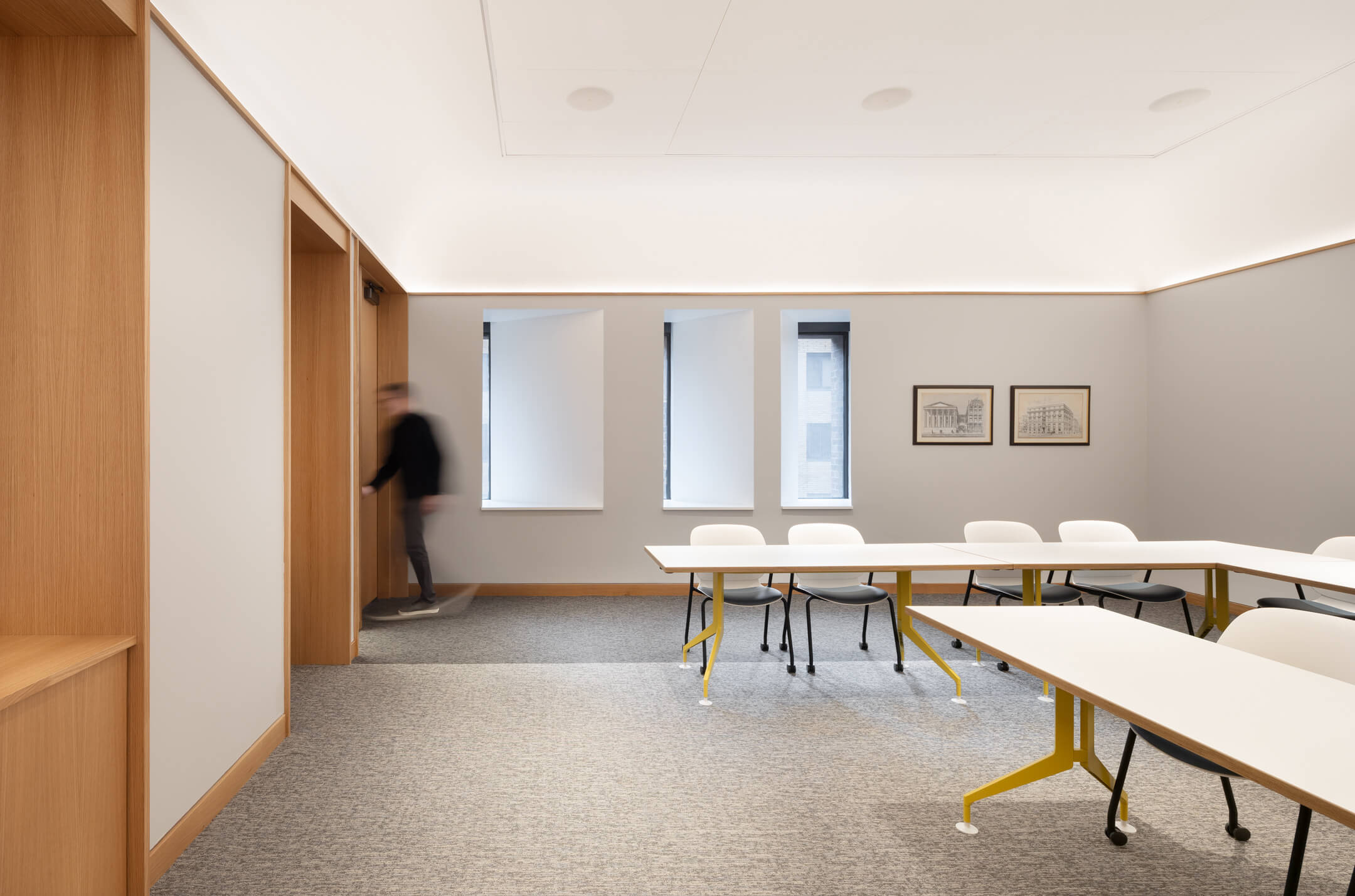
The Forum, a multipurpose learning and gathering space, features dimmable LED cove lighting to create a soft, inviting atmosphere that simulates extended daylight, ideal for lectures, group study, or special events.
“Natural light is softened through faceted window apertures, complemented by a continuous cove light that creates a luminous, even glow – critical for blending digital teaching with artifact display,” says Phillip.

The Reading Room, situated directly beside the Vault, provides students with a secure environment to engage with the archives. The spaces are intentionally interconnected, with consistent materials and a unified color palette, creating a seamless sense of continuity throughout.
The Vault stores the rich past of the University in temperature-controlled spaces to preserve the artifacts.
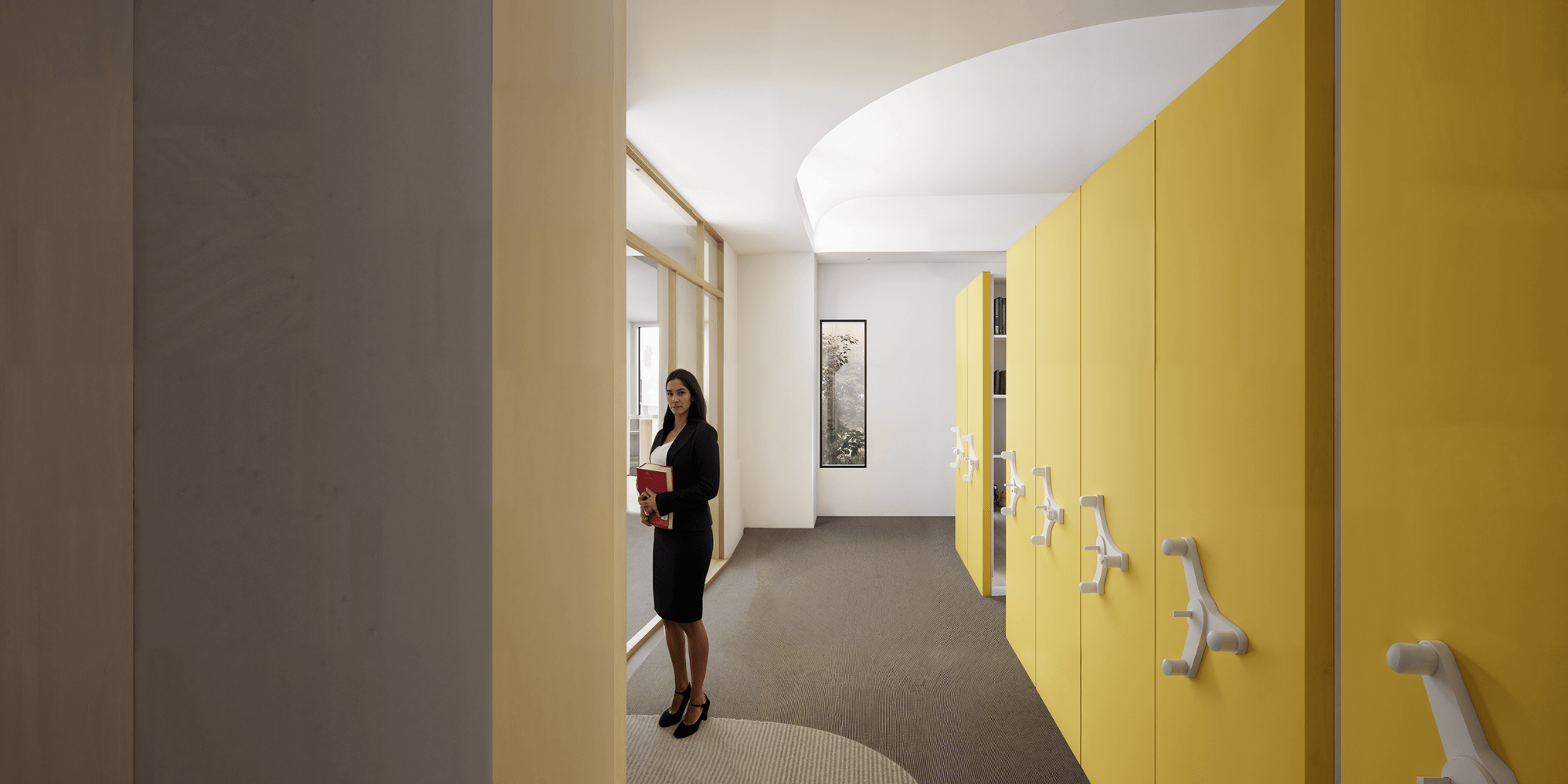
Rendering by Studio Modh
“By securing research materials while keeping the space visually open, the design symbolically ties preservation to access,” says Phillip.
Sustainability was a key consideration throughout this project. Recessed downlights are mounted on a track system for easy access and component replacement, reducing waste over time. Zonal lighting controls allow staff to dim or turn off lights in unoccupied areas, further enhancing energy efficiency.
“Fixtures were selected for their maintainability, with replaceable components that are easily accessible. Every light source is LED, providing a longer lifespan,” says Ryan.
The TJU Medical Archives pairs technical precision with emotional resonance. The lighting design protects delicate historical materials while offering an inviting, flexible, and sustainable environment. Visitors leave with more than information; they leave with a deeper connection to the history and heritage of Thomas Jefferson University.