


Behavioral healthcare environments, including inpatient facilities, EmPATH (Emergency Psychiatric Assessment, Treatment, and Healing) units, and others designed to support mental and emotional well-being, present an opportunity for compassionate design. These spaces can prioritize patient and staff safety while also supporting individuals who may be experiencing stress, anxiety, distress, or other mental health challenges.
Lighting plays an important role in that balance. Unlike general healthcare lighting, behavioral health lighting requires a targeted approach that considers light and lighting as a meaningful therapeutic tool and a critical safety element. Thoughtfully designed lighting can support visual comfort, calming environments, and contribute to patient and staff well-being.

Nemours Children’s Health, Advanced Delivery Unit – Wilmington, DE
Behavioral healthcare environments are governed by specific safety guidelines. Fixtures must be durable, tamper-resistant, and anti-ligature, with design decisions informed by the level of risk within a space.
“Safety is essential, but it shouldn’t be where the design conversation ends. Once safety requirements are met, we should think about how lighting can also provide a sense of comfort, warmth, and care,” says Hamilton Guillén, a lighting designer at The Lighting Practice (TLP).

2025 ASHE Healthcare Facilities Magazine Hospital Construction Survey
With nearly 1 in 5 U.S. adults experiencing some form of mental illness each year, according to the American Medical Association (AMA), the demand for behavioral health facilities continues to grow, as does the investment in mental health research, treatment, and care environments. This presents an opportunity to rethink what behavioral health environments can be, and how thoughtful design can contribute meaningfully to the experience of care.
Designing for the Human Experience
“When someone enters a behavioral healthcare environment, they may already be experiencing heightened stress, anxiety, or uncertainty. The environment around them can either reinforce those feelings or help create a sense of calm, comfort, and security,” says Ryan Conover, TLP Associate Principal and Director of Light + Health.
Historically, many behavioral health spaces have prioritized baseline function and safety above all else, resulting in environments that feel sterile, institutional, or enclosed. Creating a safe environment does not require sacrificing comfort, warmth, or thoughtful design.
These spaces serve people with a wide range of mental health and behavioral conditions, including anxiety, depression, bipolar disorder, post-traumatic stress disorder (PTSD), and neurodevelopmental disorders. Each person may respond differently to their surroundings, so the design must consider more than the functional requirements of the space.
Compassionate design asks designers to consider how individual decisions contribute to the experience of the environment.

“Seeing the environment from someone else’s perspective, particularly someone who may be feeling vulnerable, is key. We have to think about how they might experience the lighting, the materials, the artwork, and the space as a whole,” says Ryan.
That perspective changes the questions designers ask. How does a patient perceive the environment? How do clinicians interact with it? How might seemingly small design decisions influence comfort, familiarity, or a sense of control?
“A fixture may meet every safety requirement, but its placement, intensity, distribution, and relationship to the surrounding environment can determine whether a space feels harsh and clinical or calm and welcoming. We aren’t simply designing for the room. We are designing for the person experiencing the room,” says Ryan.
A Compassionate Approach Beyond the Design Checklist
Behavioral health lighting requires designers to navigate a complex set of guidelines and safety considerations. Resources such as the Illuminating Engineering Society (IES) Recommended Practices and Technical Memoranda, patient safety standards, materials and systems guidelines, and Environmental Safety Risk Assessments (ESRAs) can help inform design decisions.
“Safety requirements are only the starting point. Historically, once the required illuminance levels were met, the design conversations could end. But meeting those requirements alone doesn’t necessarily create an environment that feels warm, comfortable, or supportive,” says Hamilton.

Inova Fairfax – EmPATH Unit – Fairfax, VA
One way to think about this challenge is through the Four Tenets of Healthcare Ethics: autonomy, beneficence, non-maleficence, and justice. These principles provide a useful framework for considering how design decisions affect the people who use healthcare environments.
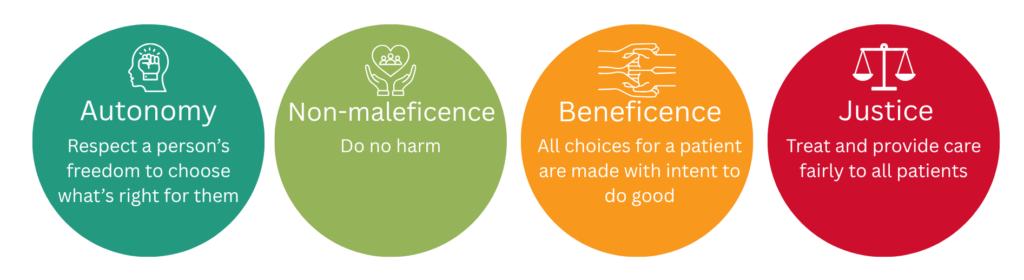
“The Four Tenets encourage us to put ourselves in the mindset of the people providing care, as well as the people receiving it. We have to ask: ‘Is this space being designed simply to meet requirements, or are we designing it to be more thoughtful? How would I feel in this space, and how might that experience be magnified for someone who is already in need of medical help?’”, says Hamilton.
Autonomy, in particular, raises an important question for designers: How can the environment give people a greater sense of agency?
In behavioral health settings, where patients may have limited control over many aspects of their surroundings, even small opportunities for choice can be meaningful.
Applying Evidence-Based Design Strategies
Evidence-based design provides a framework for translating these principles into the built environment. In behavioral health settings, strategies can help move the conversation beyond safety requirements to consider comfort, agency, connection, and well-being.
1. Positive Distraction
Positive distraction uses elements such as color, artwork, nature, movement, play, and sensory experiences to create environments that engage and support patients. In behavioral health settings, these opportunities can begin before someone even enters the building and continue throughout the patient experience.

Nemours Children’s Health, Advanced Delivery Unit – Wilmington, DE
“The end user has to be part of the conversation. With children, for example, color-changing, dynamic, or interactive lighting can create a different experience than a static environment. The design should respond to the person experiencing the space,” says Hamilton.
Lighting can work alongside architecture, materials, artwork, and other sensory elements to create moments of interest and engagement without becoming overwhelming.
2. Hospitable Design
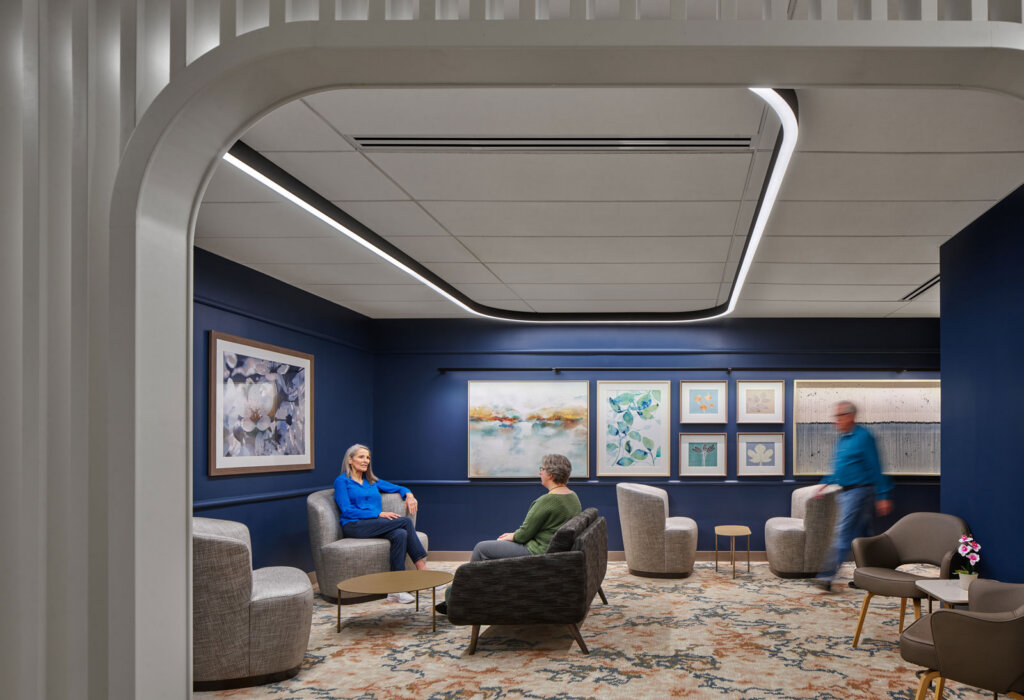
“Hospitable design brings the qualities of welcoming, comfortable environments into healthcare settings. Rather than feeling clinical or institutional, these spaces can feel familiar, inviting, and human,” says Ryan.
Valley Health System Cardiology Center – Paramus, NJ
Lighting can help create this sense of hospitality by emphasizing architecture, materials, finishes, and other details that make a space feel intentional and welcoming. Thoughtful lighting can soften the clinical character of a space and create an environment that feels more like a place to be than a place to receive care.
3. Controls and a Sense of Agency
Controls are an important part of healthcare lighting design, but they can take on additional significance in behavioral health environments.
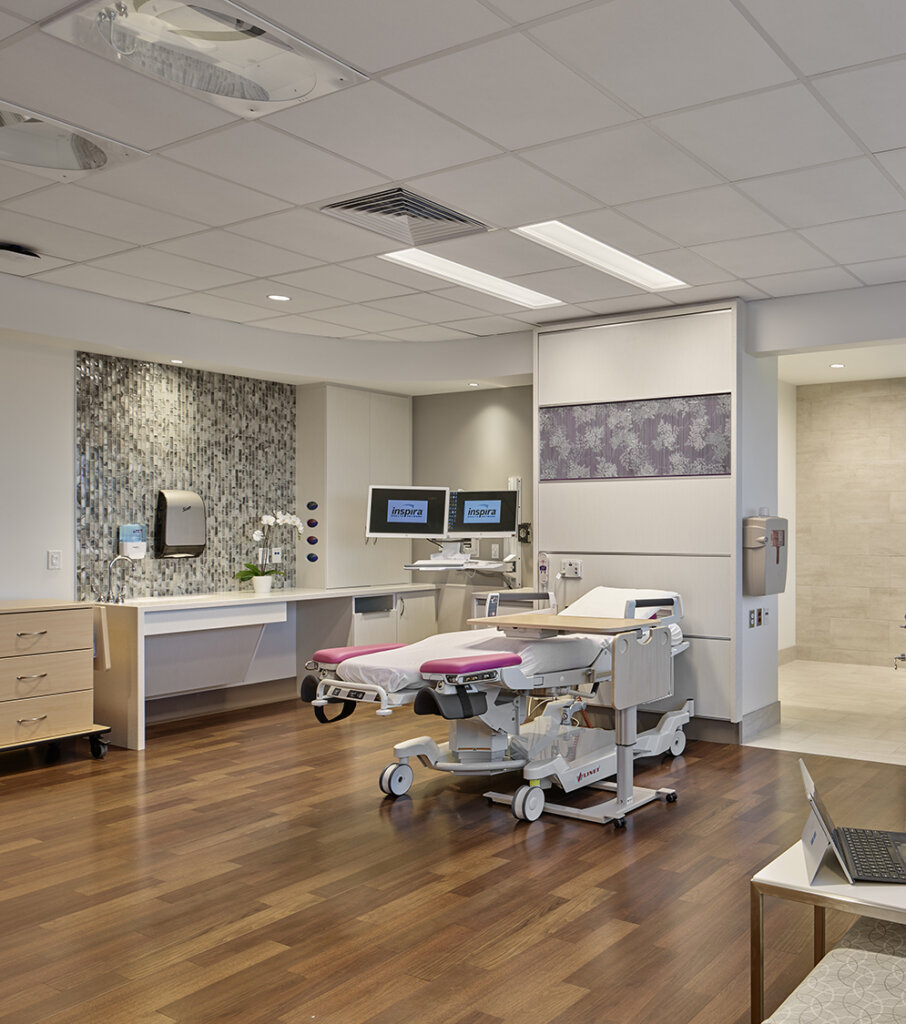
“Small moments of control can make a difference. Giving someone the ability to influence their lighting, or creating subtle markers of familiarity within a space, can help provide a sense of agency,” says Hamilton.
Inspira Medical Center Mullica Hill – Mullica Hill, NJ
Where appropriate, simple and intuitive lighting controls can provide an opportunity to give some of that agency back. Controls should also be designed with staff in mind, ensuring they are intuitive and easy to operate.
4. Connection to Nature
Daylight provides important physiological and psychological benefits and can help establish a stronger connection between indoor environments and the outdoors. When possible, access to natural light and exterior views can become an integral part of the design.
When direct access to daylight or nature is limited, lighting and other design elements can help create a similar sense of connection and openness.
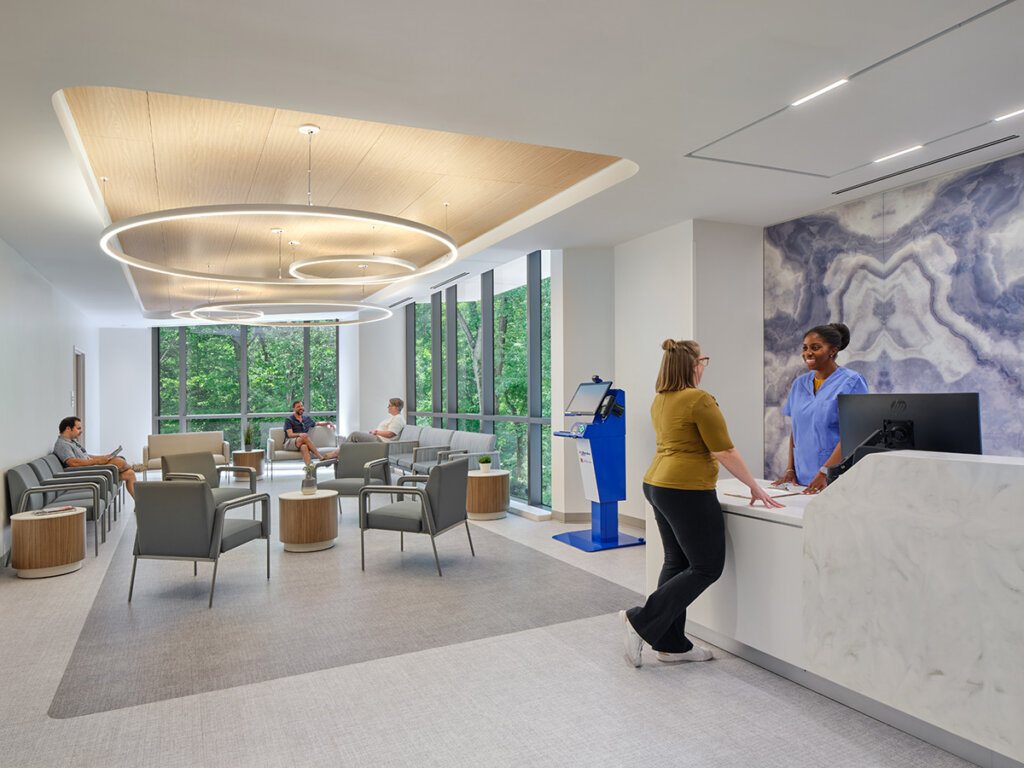
Cooperman Barnabas Medical Center Melchiorre Cancer Center – Livingston, NJ
“There’s an opportunity to create a stronger connection to the outdoors through lighting. Cove lighting, natural materials, and biophilic design strategies can help soften an environment and make it feel less institutional,” says Ryan.
5. Supporting the Circadian Rhythm
Light plays an important role in supporting the body’s natural sleep-wake cycle. In behavioral health environments, where patients may spend extended periods indoors or experience disrupted sleep, lighting can help reinforce the distinction between day and night.
“Circadian lighting supports the body’s biological clock by helping regulate the behavioral and physiological patterns associated with the day-night cycle. Light intensity, timing, duration, and wavelength all play a role, with increased morning light having a particularly strong impact on resetting the body’s natural clock,” says Ryan.

Cooperman Barnabas Medical Center Melchiorre Cancer Center – Livingston, NJ
Designers can consider appropriate light levels and qualities during the day, paired with lower light levels and reduced visual stimulation at night.
Design that Centers the Patient Experience
The most thoughtful healthcare environments recognize that a space can be secure without feeling institutional, durable without feeling clinical, and compliant without losing its sense of humanity. The goal isn’t simply to design a space that adheres to a checklist. It’s to create a warm environment that supports safety, dignity, and well-being.
*Project images illustrate suggested lighting design strategies, but not all images are behavioral healthcare spaces