

In the built environment, many disciplines come together to conceptualize, design, and build a space. Architecture, interiors, landscape, engineering, and lighting each play a distinct yet interconnected role in shaping how a place looks, feels, and functions. Lighting design lives at the intersection of these disciplines, responding to each while helping unify them into a cohesive whole. When collaboration works well, lighting becomes more than illumination; it serves an integral part of how a space is experienced.
For lighting designers, collaboration is not a single phase of a project; it is an ongoing dialogue. From early concept through construction, successful outcomes depend on shared goals and open communication among the many voices shaping a space.
Collaborating with Architects

Confidential Corporate Client – New York, NY
Close partnerships with architects allow lighting designers to reinforce spatial hierarchy, rhythm, and storytelling rather than compete with them. Through careful coordination, lighting can emphasize form, reveal structure, and guide movement, helping architecture read clearly and intentionally.
This approach is exemplified in a confidential corporate client’s new office in New York, NY. Designed by OTJ Architects, the space represents a next-level workplace environment defined by rich architectural detailing, warm wood finishes, and bold graphic installations. The lighting design takes its cues directly from the architecture, integrated discreetly into the ceiling and structural systems to preserve clean sightlines while enhancing the character of each area. Rather than calling attention to itself, the lighting supports the architectural intent, allowing the space to feel cohesive, refined, and purposeful.
Working with Interior Designers

Butcher & Rose Steakhouse – Columbus, OH
Interior design brings projects down to the human scale, where materiality, texture, and atmosphere define how a space feels. Collaborating closely with interior designers allows lighting to respond to finishes and furnishings, creating layered environments that balance function and mood.
At Butcher & Rose Steakhouse in Columbus, Ohio, lighting plays a central role in bringing the materiality and texture of the space to life. Departing from the traditionally dark and moody aesthetic, the space embraces a more vibrant, romantic atmosphere. Layers of light work together to create both energy and intimacy with oversized chandeliers providing even ambient illumination, while sculptural floral fixtures glow softly overhead. The result is a space where lighting and interiors work together to create a welcoming and memorable dining experience.
Partnering with Landscape Architects
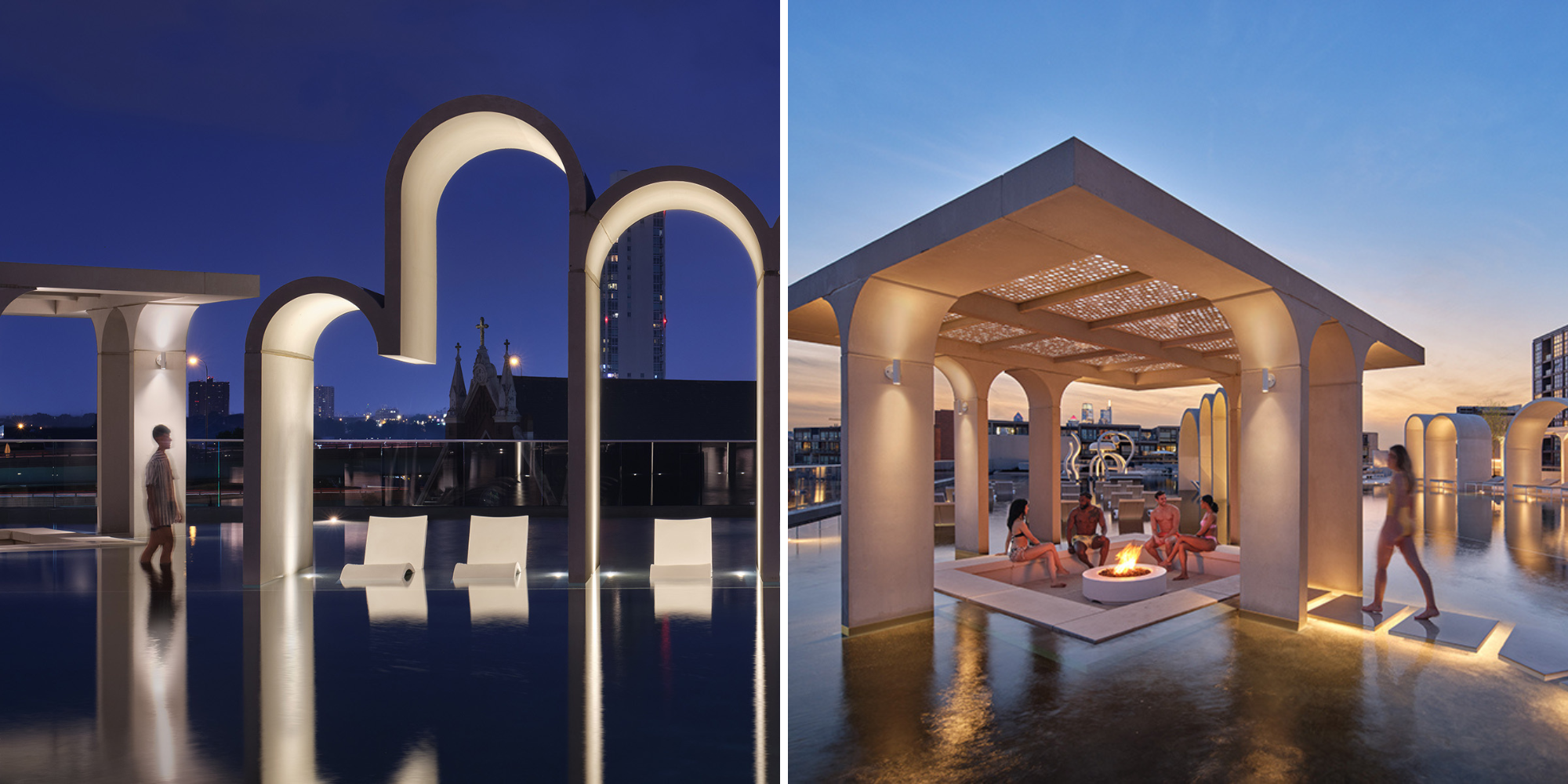
Aqua Foro Pool Club – Philadelphia, PA
In outdoor spaces, collaboration becomes even more nuanced. Working closely with landscape architects, lighting designers must balance safety, wayfinding, and visibility with sensitivity to context, ecology, and community character. Lighting supports how spaces are used after dark while respecting the natural and built environment.
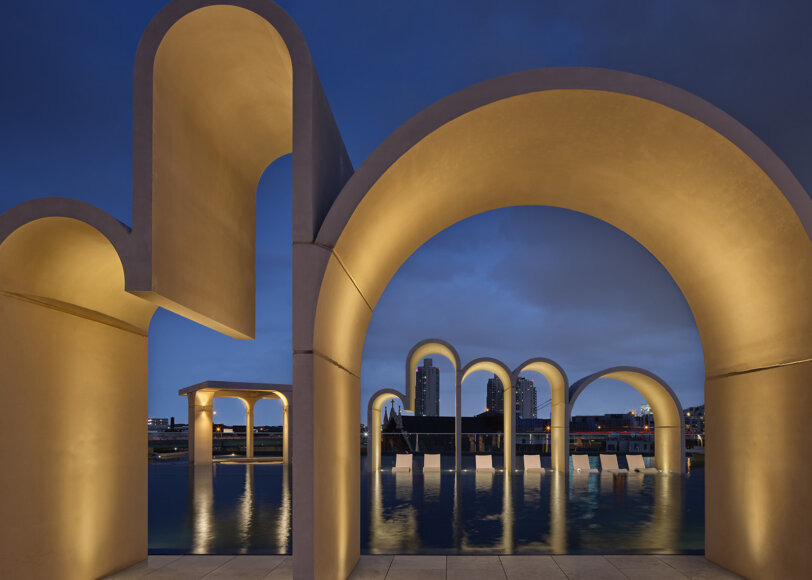
On projects such as Aqua Foro Pool Club, lighting is carefully integrated to enhance paths, gathering areas, and key features without overpowering the landscape. Subtle illumination highlights textures, and circulation routes, creating inviting nighttime environments that feel intentional rather than overlit. Through collaboration, lighting becomes a quiet yet powerful tool, extending usability, reinforcing identity, and fostering connection.
Coordinating with Engineers
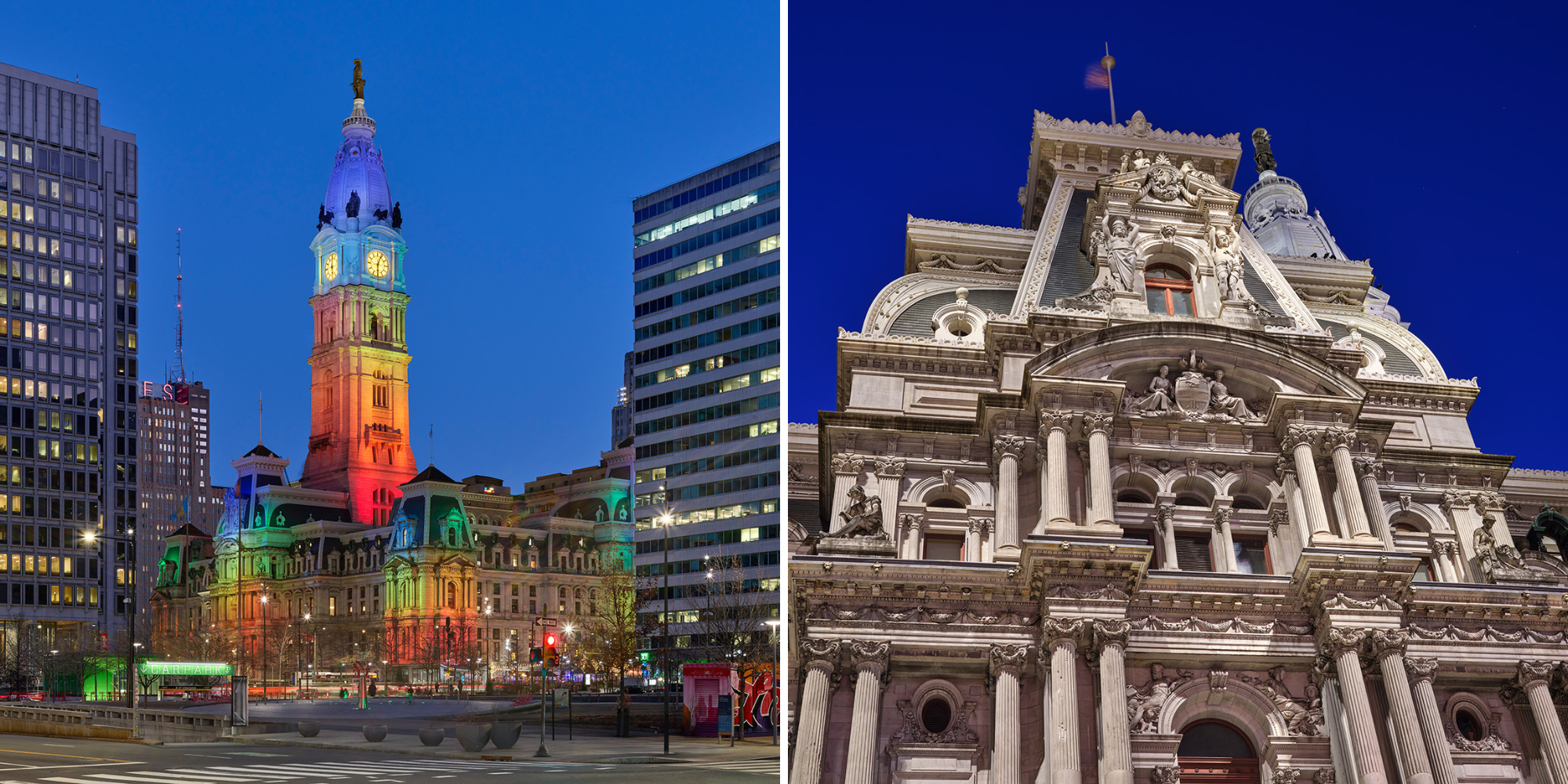
Philadelphia City Hall – Philadelphia, PA
Behind every successful lighting concept is a strong technical foundation. Collaboration with electrical and systems engineers ensures that creative ideas are supported by efficient infrastructure, thoughtful controls, and long-term performance. This coordination is especially critical on complex civic projects such as Philadelphia City Hall, where design intent must align with sustainability goals, code requirements, and operational needs.
When technical and creative teams work in sync, lighting solutions not only perform reliably but also remain flexible and enduring over time. Early coordination helps avoid compromises later, allowing the final result to be both expressive and responsible.
Working with Contractors

Northeastern University Snell Library – Boston, MA
Contractors play a critical role in interpreting and installing the lighting to meet the design intent. While lighting designers define the intent, such as how light shapes space, mood, and experience, contractors execute that vision within the realities of schedule, budget, and constructability.
Effective collaboration is ongoing and hands-on, involving clear documentation, coordination, and construction administration visits to review installations and resolve challenges. This ensures the design intent is fully realized.
At Northeastern University’s Snell Library, close collaboration with the contractor was key to creating a dynamic, welcoming environment. A phased construction approach allowed the team to refine details and improve each stage as the project progressed. Inside, suspended acoustic panels, known as “the butterflies,” were paired with custom drop-lens fixtures to illuminate both above and below, enhancing acoustics and visual interest. A dramatic four-story stair with suspended linear lighting highlights circulation and gathering spaces, demonstrating how strong coordination brings complex lighting concepts to life.
Collaboration is at the heart of successful lighting design. By working closely with architects, interior designers, landscape architects, engineers, and contractors, lighting designers help bridge disciplines and translate collective vision into built reality. When collaboration is embraced as an ongoing process rather than a checkpoint, the result is lighting that enhances experience, strengthens design intent, and elevates the spaces people inhabit every day.