

Outdoor public spaces should continue to feel safe, welcoming, and engaging long after the sun goes down. Whether it’s a park, bridge, plaza, parking garage, or civic landmark, thoughtful lighting does much more than provide visibility, it shapes how people move, gather, and experience a place.
The Lighting Practice’s designers share their expertise and tips for illuminating a variety of outdoor environments.
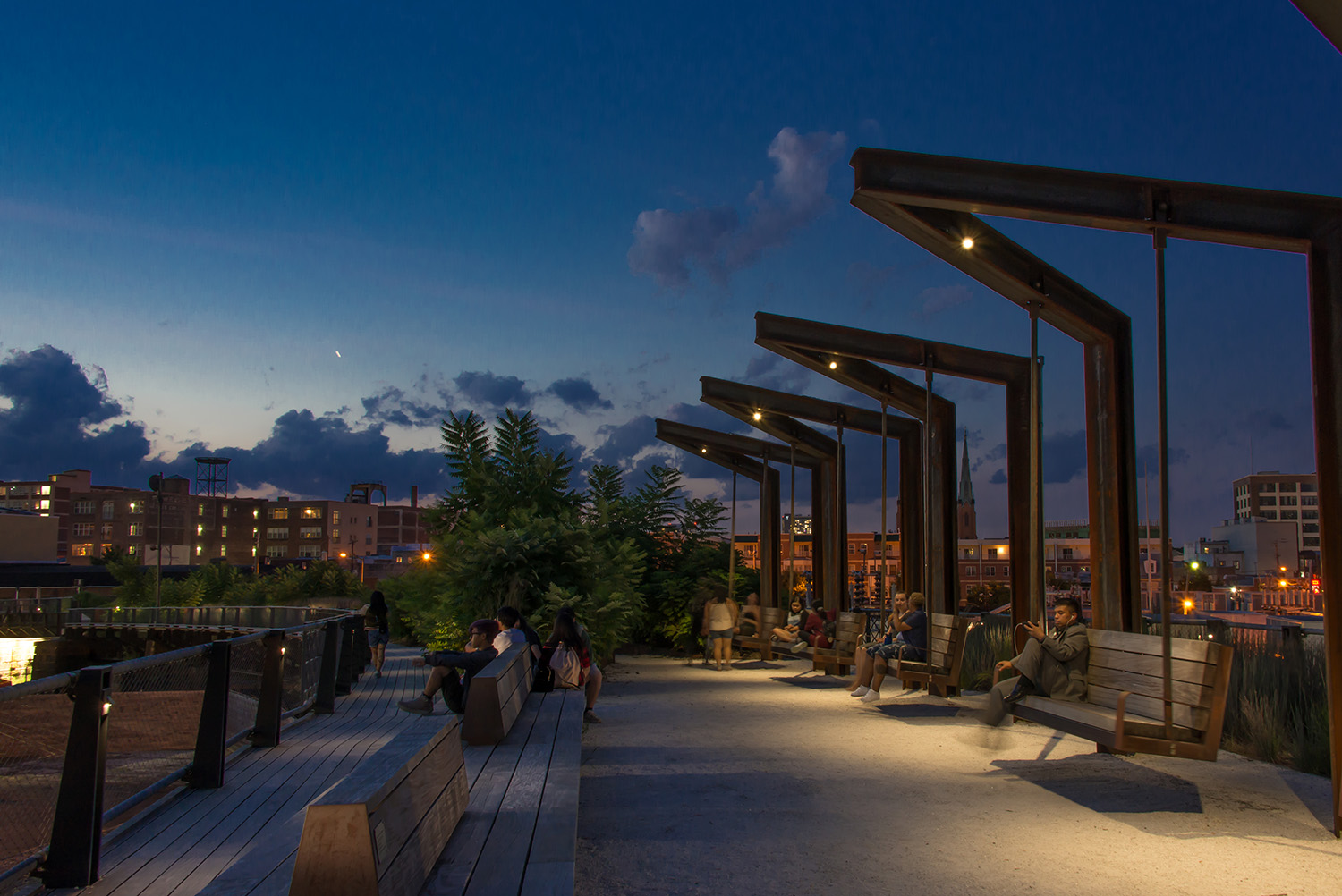
The Rail Park – Philadelphia, PA
Wayfinding begins with lighting that helps people intuitively understand a space. By creating a visual hierarchy, lighting can distinguish entrances, pathways, gathering areas, and destinations while encouraging exploration after dark.
“The lighting should be the visual breadcrumbs that lead you through and give you the confidence of what you’re walking into,” says Caitlin Bucari.
Uniform illumination, balanced contrast, and lighting vertical surfaces often have a much greater impact on how comfortable people feel in a park or public space.

Aqua Foro Pool Club – Philadelphia, PA
Outdoor gathering spaces benefit from layered lighting that distinguishes circulation paths from seating areas while highlighting landscape and architectural features.
“Lighting is transformative, especially at night. The lighting techniques that are applied are key factors in how the space is experienced,” says Eve Quellman, “Lighting is used to help navigate, demarcate, and accentuate these programmatic elements”.
At Aqua Foro Pool Club, in-grade lighting, illuminated benches, landscape accents, and architectural lighting work together to create both lively gathering spaces and quieter areas for relaxation.
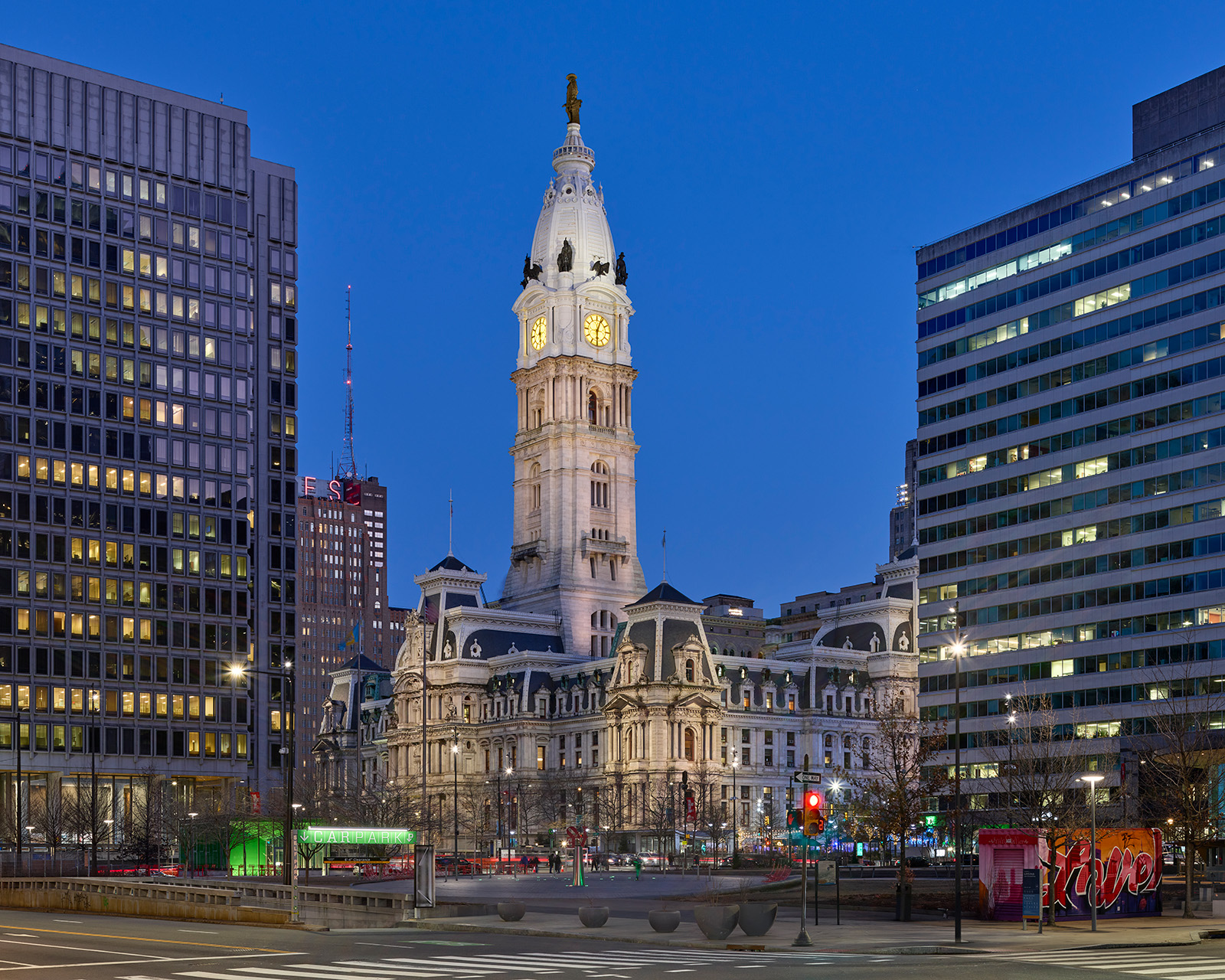
Philadelphia City Hall – Philadelphia, PA
Facade lighting helps buildings become landmarks while strengthening their connection to the surrounding public realm. Rather than illuminating every surface equally, lighting should celebrate the architectural moments that make a building unique.
“We get the chance to highlight the important architectural moves. Zeroing in on special areas leads the viewer on a journey of discovery,” says Lily Meaker.
Thoughtful façade lighting creates recognizable destinations while helping visitors orient themselves after dark.

Spring Garden Connector – Philadelphia, PA
Lighting can transform infrastructure from a purely functional connection into an inviting public experience. In bridges and underpasses, vertical illumination helps improve spatial awareness while reducing the feeling of enclosed or dark environments.
“Simply putting more light on the ground won’t have a significant positive impact on the perception of safety. Illuminate vertical surfaces such as walls, piers, and overhead structures instead,” says Jonathan Hoyle.
By helping people better understand the space around them, lighting creates a stronger sense of comfort and confidence throughout their journey.

Philadelphia Zoo Intermodal Transportation Center – Philadelphia, PA
Parking garages are often the first and last spaces people experience when visiting a destination. Lighting plays a critical role in making these environments feel intuitive, comfortable, and secure.
“Lighting is a key component of intuitive wayfinding. By establishing a clear visual hierarchy, lighting guides users seamlessly from arrival to their destination,” says Brian Wiley.
Thoughtfully illuminated pedestrian routes, stairwells, elevators, and entrances improve navigation while creating a brighter, more welcoming environment.
Lighting Beyond Visibility
Whether illuminating a park, plaza, bridge, façade, or parking garage, successful lighting design goes beyond simply making a space brighter. Thoughtful lighting helps people navigate confidently, strengthens a sense of place, enhances architectural character, and creates environments where communities can gather and connect after dark.


